
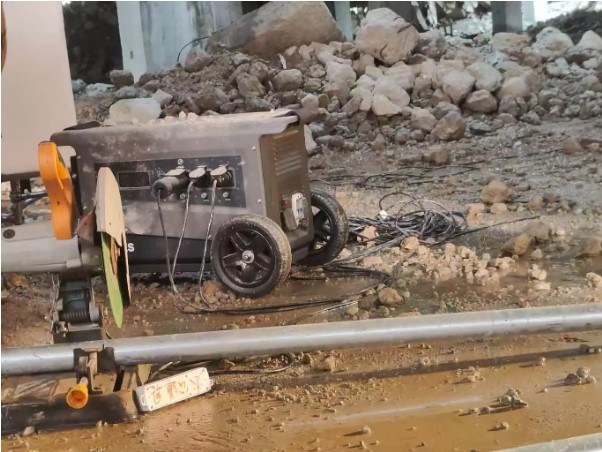
Modern construction projects demand more from their power supply than ever before. Larger sites, more sophisticated equipment, tighter schedules, and stricter compliance requirements have all raised the bar for what temporary power needs to deliver. An Industrial Power Station built for today’s construction environment is not simply a generator on wheels, it is a complete power management solution designed to keep complex, fast-moving projects running without interruption from groundbreaking to handover.
Why Power Reliability Matters More Than Ever
Construction timelines have never been more compressed. Clients expect faster delivery, contractors are managing multiple trades simultaneously, and the financial penalties for delays leave very little margin for error. In that environment, a power failure is not a minor inconvenience it is a serious operational event that affects every crew on site, disrupts carefully sequenced workflows, and can push completion dates back in ways that are difficult and expensive to recover from.
The expectations placed on temporary power have grown accordingly. Reliability is no longer a feature worth paying extra for it is the baseline requirement, and any power solution that cannot meet it consistently is not fit for purpose on a modern construction project.
The Demands of a Modern Construction Site
Today’s construction sites run equipment and systems that would have been unrecognizable on a job site two decades ago. Advanced power tools, computerized site management systems, electric material handling equipment, LED site lighting, welfare facilities with heating and cooling, and security camera networks all draw power continuously. The total load on a modern site is significantly higher than it was in previous generations, and it fluctuates constantly as activity levels shift throughout the working day.
Managing that variable demand without oversupplying or undersupplying requires a power solution with genuine load management capability not just raw output capacity. A system that delivers stable, clean power regardless of what the load profile looks like at any given moment keeps equipment running properly, protects sensitive electronics, and reduces the wear and damage that voltage fluctuations cause to tools and machinery over time.
Built to Handle Harsh Site Conditions
Construction sites are hard on equipment. Dust, vibration, temperature extremes, moisture, and the general physical punishment of an active building site take a toll on anything that is not built to withstand them. Power equipment that performs well in a controlled environment but struggles in real site conditions is a liability rather than an asset.
Reliable temporary power solutions for construction applications are engineered with site conditions in mind from the ground up. Robust enclosures protect internal components from dust and moisture. Vibration-resistant construction handles the movement and impact of a busy site without affecting performance. Wide operating temperature ranges ensure consistent output whether the site is exposed to summer heat or winter cold. This durability is not incidental it is what separates equipment that lasts the duration of a long project from equipment that requires constant attention and repair.
Distribution Across Large and Complex Sites
A powerful central unit is only as useful as the distribution network connected to it. On large or multi-storey construction sites, getting power to where it is needed efficiently, safely, and without significant voltage drop over long cable runs requires careful planning and well-designed distribution infrastructure.
Temporary distribution boards positioned strategically across the site reduce cable run lengths, improve power quality at the point of use, and make it easier for individual trades to access power without creating the tangled, hazardous cable runs that are a constant problem on poorly planned sites. Proper cable management overhead runs where possible, cable ramps at ground level, clearly marked distribution points keeps the site organized and reduces the risk of electrical incidents caused by damaged or overloaded cables.
Compliance and Safety on Every Project
Electrical safety regulations make no distinction between permanent and temporary installations. Both are subject to the same standards, and both carry the same consequences when those standards are not met. On construction sites, where conditions are constantly changing and the pressure to keep work moving is always present, maintaining electrical compliance requires deliberate effort rather than good intentions.
A properly engineered temporary power setup includes the full range of required protective devices circuit breakers, residual current devices, surge protection along with clearly labeled distribution points, documented inspection schedules, and clear procedures for isolating power safely when work requires it. These are not optional additions they are the foundation of a site electrical setup that protects every worker on the project.
Planning for the Full Project Lifecycle
One of the most common mistakes in temporary power planning is sizing the solution for one phase of the project without accounting for how requirements will change as the project progresses. The power profile of a site during demolition and groundworks is very different from what it needs during structural steel installation, mechanical and electrical fit-out, or finishing trades.
A power solution that can be scaled and reconfigured as project phases change delivers better value and better performance across the full project lifecycle. Planning that flexibility in from the start rather than trying to adapt an inadequate setup under pressure mid-project is one of the practical differences between a well-run site and one that is constantly playing catch-up.
Final Thoughts
For construction companies, project managers, and site managers who cannot afford to let power become a limiting factor on project performance, investing in the right solution from the start is the only approach that makes sense. A purpose-built Industrial Power Station delivers the reliability, durability, compliance capability, and load management performance that modern construction projects demand and ensures that power is the one thing on site that nobody ever has to worry about.